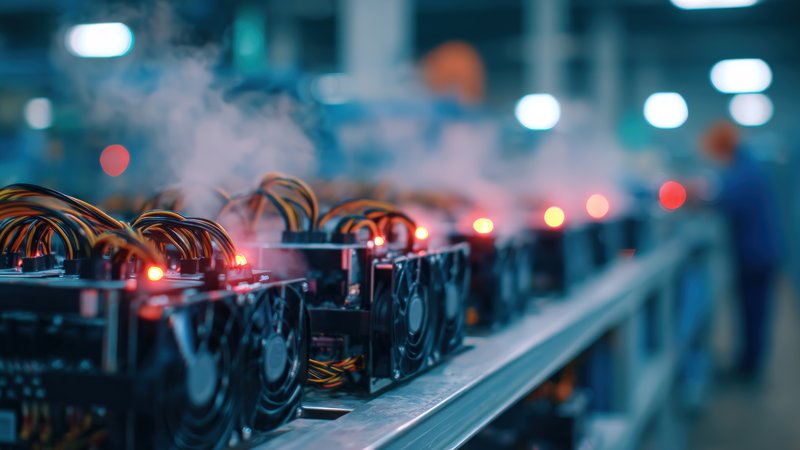
GPU failures have become the defining operational challenge for AI companies, not because the hardware is poorly made, but because AI workloads push these systems far beyond their intended operating parameters. Analytics India Magazine reports that modern AI clusters operate at "extreme limits of compute, bandwidth, and temperature" where hardware failures shift from exceptional events to statistical certainties that must be engineered around.
This isn't just a scaling problem—it's an architectural reality that exposes how unprepared our infrastructure stack is for AI's demands. Traditional data centers were designed for predictable, steady-state workloads. AI training runs push GPUs to 100% utilization for days or weeks, generating heat loads and power draws that stress cooling systems, memory controllers, and interconnects in ways that enterprise hardware was never stress-tested for. The result is a new category of infrastructure debt that every serious AI company is quietly dealing with.
What's missing from most discussions is the economic impact. When a single H100 node fails during a multi-million-dollar training run, you don't just lose that GPU—you potentially lose weeks of compute across the entire cluster if checkpointing isn't perfectly implemented. The companies that figure out fault-tolerant training architectures and predictive failure detection will have a significant operational advantage over those still treating GPU failures as unexpected disruptions.
For developers building AI applications, this means designing for infrastructure uncertainty from day one. Don't assume your training jobs will complete without interruption. Implement aggressive checkpointing, plan for node failures, and budget 15-30% more compute time than your models theoretically require. The hardware will fail—the question is whether your code can handle it gracefully.