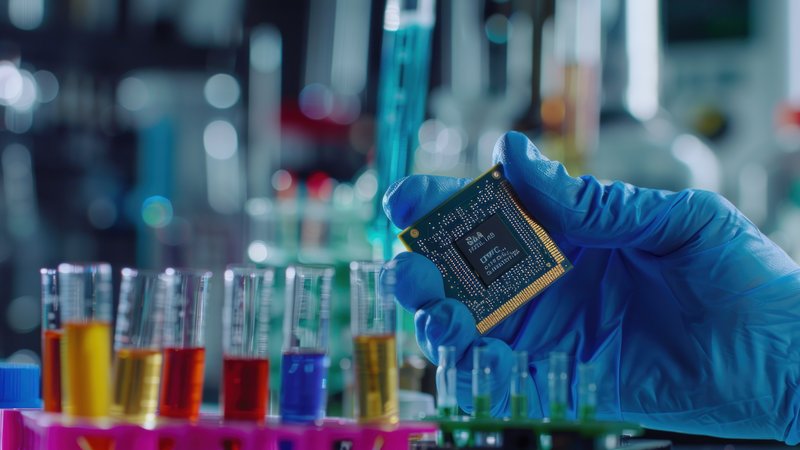
Intel announced Tuesday it will design and build Elon Musk's Terafab AI chip factory in Austin, Texas, targeting 1 terawatt per year of compute production for Tesla and the newly merged SpaceX-xAI entity. The facility aims to supply chips for Musk's "robot army" ambitions, including self-driving cars, humanoid robots, and space-based data centers, with SpaceX planning an IPO later this year.
This partnership resolves months of increasingly desperate public appeals from Musk for chip manufacturing help. "Can someone else build these things?" he pleaded during an earnings call earlier this year, questioning whether the industry could meet AI demand. The reality check was overdue—building semiconductor fabs requires specialized expertise Musk lacks despite his factory experience with cars and rockets. Intel's involvement shifts the burden from a billionaire with big AI dreams to a company that actually knows silicon manufacturing.
What makes this partnership particularly interesting is the timing and mutual need. Intel is struggling with its own challenges while simultaneously building two Arizona fabs as part of a $20 billion US expansion. Meanwhile, TSMC is constructing its own "Gigafab" with up to 12 plants near Phoenix. The Austin location puts Terafab in direct competition with these established players in what's becoming a concentrated semiconductor manufacturing hub in the American Southwest.
For developers and AI builders, this represents another potential supply chain diversification beyond NVIDIA's dominance. If Terafab actually delivers on its 1TW target, it could provide more options for large-scale AI infrastructure—assuming Intel can execute on schedule and Musk's companies can actually utilize that much compute capacity effectively.