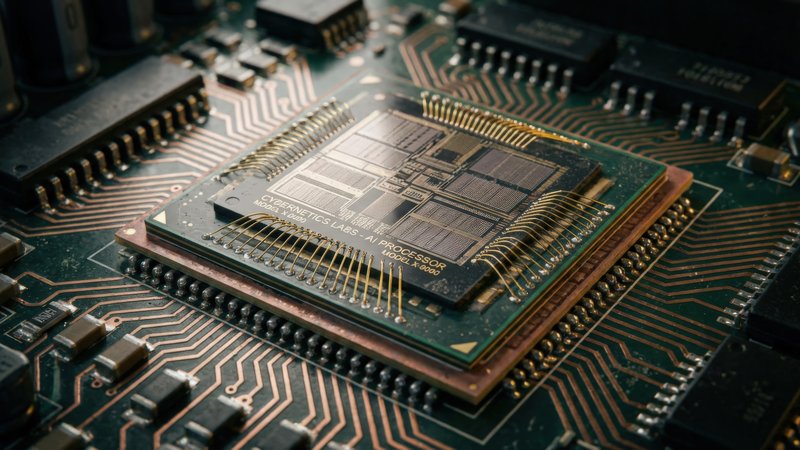
SK Hynix plans to raise $10-14 billion through a US IPO to expand memory chip production capacity, positioning itself as a solution to the ongoing "RAMmageddon" that's throttling AI development. The South Korean memory giant aims to use the massive capital infusion to build new fabrication facilities and boost high-bandwidth memory (HBM) production specifically for AI workloads.
The timing isn't coincidental. AI training runs are hitting memory walls constantly — I've watched teams burn through compute budgets because they can't get enough fast memory to feed their models efficiently. HBM prices have tripled in 18 months, and getting allocation requires months of advance planning. Every AI company I know is scrambling for memory allocation, making it the new GPU shortage.
But here's the reality check: even with $14 billion, new memory fabs take 2-3 years to come online. SK Hynix's IPO might signal confidence in long-term AI demand, but it won't solve the immediate supply crunch crushing current projects. Samsung and Micron are also ramping capacity, yet none of this helps developers dealing with memory constraints today. The real question is whether this capital will go toward innovative memory architectures or just more of the same expensive HBM.
For AI builders, this means continuing to optimize around memory constraints rather than waiting for relief. Focus on model architectures that use memory more efficiently, implement better caching strategies, and consider hybrid approaches that reduce peak memory requirements. The cavalry is coming, but it's still years away.