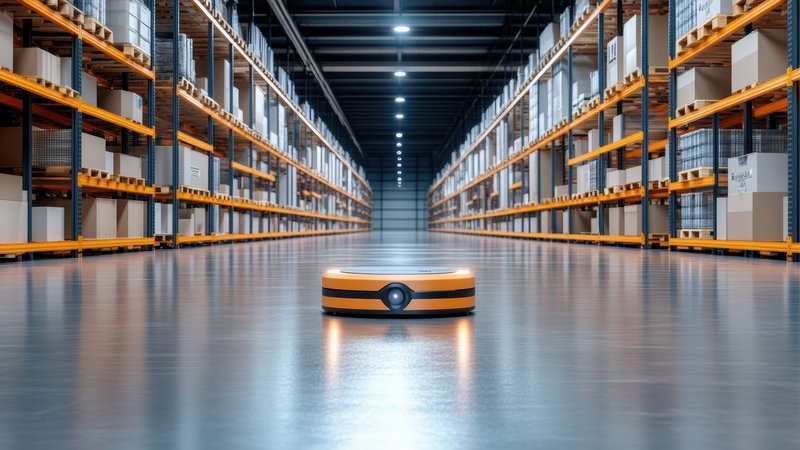
A Central European supermarket chain has deployed a custom voice-picking system using ElevenLabs' text-to-speech technology, replacing traditional warehouse management interfaces that cost $150K-$300K for a 50-worker facility. The smartphone-based solution guides warehouse operators through audio instructions instead of handheld scanners, with workers confirming picks verbally while keeping both hands free for handling goods. Traditional voice-picking systems require proprietary hardware costing $2,000-$5,000 per headset and 3-6 month deployment cycles, making them prohibitive for smaller operations.
This represents a broader shift toward accessible AI implementation in industrial settings. Voice picking isn't new—it's been around since the early 2000s—but ElevenLabs' API makes it economically viable for mid-market logistics companies that couldn't justify enterprise solutions. The technology addresses real operational constraints: operators who can't read local languages, workflows requiring both hands free, and the 55% of warehouse operating costs tied to labor-intensive picking operations. At 250 boxes per hour productivity rates, the math works for price-sensitive deployments.
What's missing from this success story is scalability analysis and failure modes. How does ElevenLabs' speech recognition perform in noisy warehouse environments compared to purpose-built industrial systems? The article doesn't address latency, offline capabilities, or integration complexity with existing WMS platforms. More critically, it sidesteps the vendor lock-in question—swapping one dependency (proprietary hardware) for another (ElevenLabs API) without discussing data sovereignty or service continuity risks.
For developers considering similar implementations, the approach validates using consumer AI APIs for industrial applications, but demands careful evaluation of reliability requirements. Voice interfaces work well for structured, repetitive tasks, but production deployments need fallback mechanisms and performance monitoring that this proof-of-concept doesn't demonstrate.