Amazon announced an expanded Anthropic partnership today with numbers that reframe how to think about lab-hyperscaler relationships. Up to $25 billion in new investment from Amazon (5 billion immediate, up to 20 billion later), on top of the 8 billion Amazon had already put in. Anthropic reciprocates with over $100 billion in AWS spend across the next decade. This is not a sponsorship or a cloud-credit swap. It is the deepest capital-plus-compute entanglement any major AI lab has with any hyperscaler.
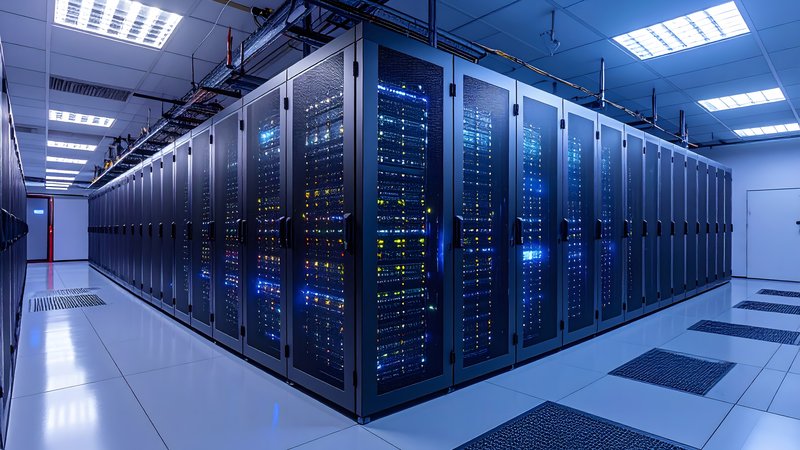
The compute side is where the numbers get interesting. AWS has already deployed more than a million Trainium2 chips for Anthropic, most of them inside Project Rainier, the multi-datacenter cluster that came online last year. Additional Trainium2 lands by end of June 2026. In the second half of 2026, Trainium2 and Trainium3 expansion will add nearly 1 gigawatt of new capacity. The decade-long ceiling is up to 5 gigawatts total, with options to roll into Trainium4 and successor chips as they ship. On the CPU side, tens of millions of Graviton cores (the 96-core generation) handle everything Trainium does not. This is Anthropic building a flagship on Amazon custom silicon at a scale that makes NVIDIA-dependence a shrinking fraction of their training and serving footprint.
Three things to register. First, the concentration: Anthropic's cloud posture is AWS-first in a way that makes "multi-cloud" a technicality rather than a hedge. Today's announcement does not address Azure or GCP arrangements, but a $100 billion decade-long spend commitment to one provider is effectively exclusivity by gravity. Second, the silicon politics. Trainium chips are Amazon's answer to NVIDIA's pricing power in AI training, and Anthropic running a frontier workload on Trainium at this scale is the validation case Amazon has been working toward since the original 2023 partnership. Third, the regulatory shadow. The announcement does not mention antitrust, but $25 billion of equity from the largest cloud provider into the third-largest frontier lab is exactly the structure competition authorities in the US and UK have been watching for the past two years.
If you are building on Claude via Bedrock, the practical implication is that the capacity story is stable. Anthropic's compute runway is now measured in gigawatts and in decade-long commitments, not in quarterly credit tranches, and that translates into API availability and pricing stability that closed competitors without similar deals will struggle to match. If you are building on the open-weights side — DeepSeek, Moonshot, Qwen, GLM — the implication is different. The hyperscaler-lab lockup model is now real money at real scale, which means the economic reason for open-weights to exist is partly about resisting exactly this kind of concentration. Two futures for the AI industry are getting priced in parallel this year. The Amazon-Anthropic numbers are the cleanest snapshot of one of them.