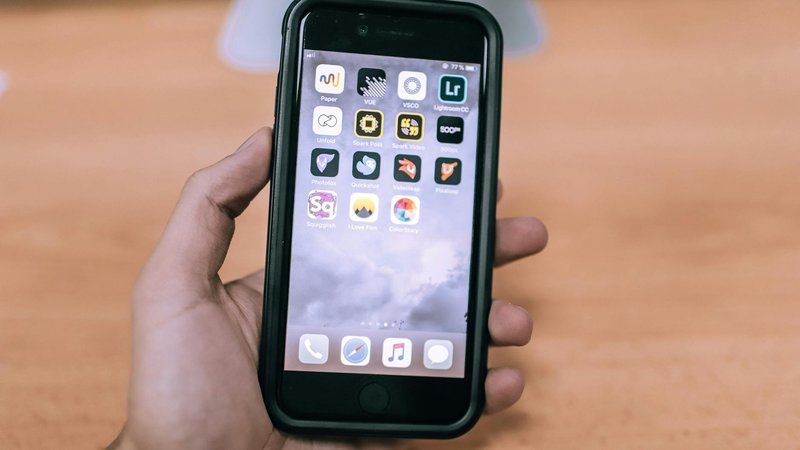
Bloomberg's Mark Gurman reports Apple is developing three new Apple Intelligence photo editing tools for iOS 27, iPadOS 27, and macOS, set to land sometime in 2026. The names: Extend, a generative-fill tool that lets users zoom out and expand the borders of a captured photo by dragging the edges and letting AI fill in surrounding content; Enhance, a more sophisticated AI-driven version of the Auto button that adjusts colors, lighting, and sharpness; and Reframe, a tool specifically for the spatial photos used by Vision Pro that allows users to shift the perspective of a photo after it has been captured. The piece of news that's actually unusual: Gurman explicitly reports Extend and Reframe "don't perform reliably during internal testing," which could trigger delays or scaled-back functionality. Internal-testing failure detail isn't normally in Apple rumor pieces — that level of specificity suggests Gurman's sourcing inside the company is unusually direct, and that someone wanted the reliability problem made public.
The strategic frame is the catch-up story Apple has been managing for two years now. Google's Pixel devices have shipped Magic Eraser since 2021 and generative image expansion since 2024; Samsung's Galaxy lineup has aggressively layered AI editing across its consumer phones; even Microsoft's Surface line has Photos features that match or exceed what Apple ships today. Apple's competitive answer has been on-device processing and privacy — a smaller surface of capabilities, but one that runs locally and doesn't send your photos to a cloud. That trade-off was defensible when the gap was narrow and the privacy differentiator was novel. It's harder to defend in 2026 when Pixel users have had generative photo expansion for two years and Apple's existing Clean Up tool gets criticized for visual artifacts and inconsistent results. iOS 27's three new features are the catch-up move, and the internal-testing reliability problem is the cost of having waited.
The Reframe tool is the more interesting product piece. Spatial photos — the 3D images Vision Pro captures and displays — are a category where Apple has no real competition because no one else has a meaningful spatial-photo install base. A tool that lets you shift perspective on a 3D capture after the fact is a feature that Pixel and Galaxy literally cannot ship today. That makes Reframe the most distinctive of the three, and also (per Gurman) the one performing least reliably in testing. Spatial-photo perspective shifting requires the model to invent visual content from viewpoints not captured in the original spatial sample, which is a harder generative problem than 2D image extension. If Apple ships it well, it gives Vision Pro a content-creation moat. If they ship it badly or delay it, the Vision Pro story stays mostly about display hardware rather than software ecosystem. The reliability problem could be the difference between a meaningful product line and a continued niche.
For builders, three takeaways. First, Apple's pattern of waiting until generative editing primitives mature before shipping is now visibly costing the company feature-for-feature against Google and Samsung — but the on-device privacy guarantee is still meaningful for a specific user segment. If you're picking a deployment target for AI photo editing, the Apple-vs-Android trade-off is now between feature breadth (Android) and on-device processing (Apple), which maps to a real user-segmentation question: prosumer photographers who want maximum capability will likely move to Android stacks; users with privacy-load-bearing workflows (medical, legal, journalism) keep Apple. Second, watch WWDC 2026 (June) for the actual unveiling — if Reframe is delayed or scaled back, that confirms the spatial-photo feature surface isn't ready, which in turn implies Vision Pro 2 (rumored for late 2026) will continue leading on hardware rather than software. Third, the Gurman reliability-failure detail is itself a meta-signal: when an Apple rumor pipeline includes internal-testing struggles, it usually means someone inside Apple wanted the expectations managed downward. Build calibration accordingly — the timeline that gets announced at WWDC is often longer than the announcement implies, and "preview" versus "shipping" tends to slip into the next cycle when reliability is the underlying issue.