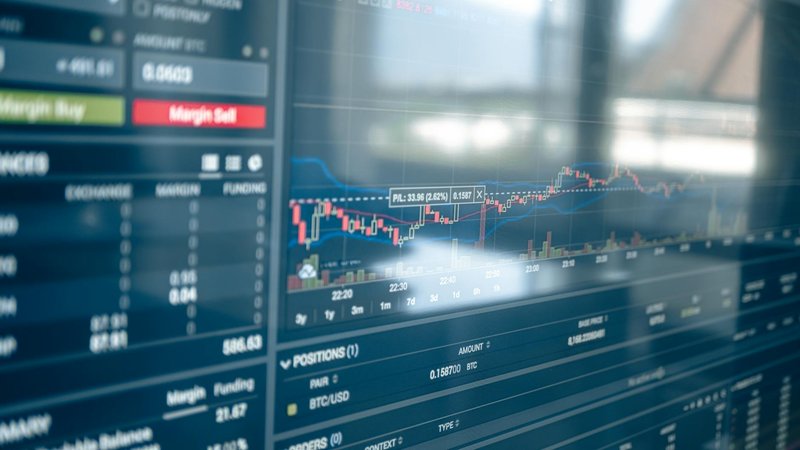
CME Group, the largest derivatives exchange in the US, launched "compute futures" this week with Silicon Data providing the GPU price benchmark index. Investors can now lock in prices for cloud GPU rental capacity through standard futures contracts — the same mechanism that has hedged oil, copper, and memory chips for decades. Silicon Data CEO Carmen Li: "GPU markets have historically lacked standardized reference pricing. The launch of compute futures is an important step towards giving AI builders, cloud providers and investors more reliable tools for valuation, hedging and long-term planning." Silicon Data shipped a GPU Forward Curve last month — the first standardized look at anticipated GPU capacity costs both spot and forward — and this CME launch turns that index into a tradeable derivative.
Futures markets emerge when commodity pricing matters enough that hedging becomes economically valuable. CME has run oil, gold, wheat, and copper futures for over a century; memory chip futures are recent. GPU-rental futures complete the AI-infrastructure commodity stack: rare-earth elements (the materials), memory chips (the inputs), and now compute (the output). The new contract lets cloud providers like Crusoe, Lambda, and CoreWeave hedge their long-term capacity exposure, and lets AI builders lock in cost predictions for model training and inference workloads that span months or years. The Silicon Data benchmark index is the load-bearing piece — futures markets need a standardized reference price, and there wasn't a credible one for GPU-hours until now. Silicon Data's existing products: standardized GPU price index, dynamic random-access memory price index, GPU Forward Curve. Morgan Stanley analyst Shawn Kim flagged the broader market thesis to clients this week: "The AI system in the future will look like a distributed system consisting of GPU racks for dense model compute … [and] agentic CPU racks for orchestration, processing data and tool execution." If that distributed-stack thesis holds, both GPU and CPU rental futures markets become structurally relevant for the entire agent runtime.
The financialization of AI compute is the marker of an infrastructure becoming mature in market-economics terms — same shift oil went through in the 1970s when futures markets ended the boom-bust cycle pricing for crude. For hyperscalers (AWS, Google, Microsoft, Meta) building data centers: hedging long-term capex against GPU rental price swings is real money, and they're announcing increased capex this year. For AI builders: training a frontier model is a multi-month commitment to compute; locking in price exposure via futures de-risks the capex and burn-rate math. For investors: this is the first liquid way to express a directional bet on AI compute prices without picking a specific cloud provider or chip stock. The risk that comes with the territory: when AI compute becomes a hedgeable commodity, speculative capital flows in alongside the commercial hedgers — futures markets attract arbitrageurs trading the forward curve. Whether that stabilizes prices (market-making theory) or destabilizes them (cf. oil futures speculation in 2008) is the open question over the next two to three years. SPAN's distributed-terrestrial pitch (#835), the orbital data center bets (#831 Google-SpaceX, #818 Cowboy Space, #799 Anthropic-Colossus), and the xAI/QTS environmental-justice constraints (#836, #816) all live downstream of this: if compute prices keep climbing on hyperscale terrestrial buildouts and the futures market reflects that climb, the architectural alternatives get pulled forward by the financial signal.
CME launches; Silicon Data benchmarks; Carmen Li named, Shawn Kim cited. The specific GPU model referenced in the contract, the settlement mechanics, and the contract size weren't in the source reporting and want closer inspection before treating this as a production-grade hedging instrument for any specific workload. For builders running compute-intensive workloads: a hedging tool exists now that didn't exist last month, which changes the CFO conversation around AI infrastructure budgeting and procurement timing. For everyone else watching the AI economy: GPU-hours are now a financialized commodity. That's a sentence that wouldn't have parsed three years ago, and it's the signal that AI infrastructure has reached the same market-mechanism maturity as oil, copper, and memory — which is both a stabilizing development and a new attack surface for speculative cycles.