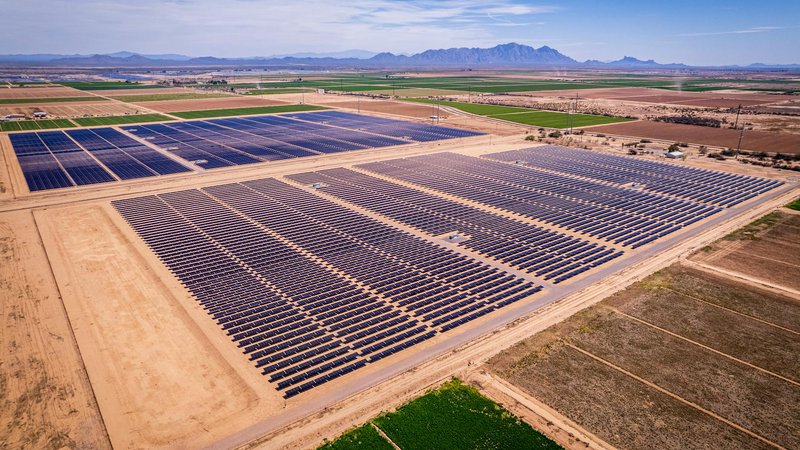
Honor the Earth's No Data Center Coalition is now tracking between 103 and 160 proposed hyperscale data centers on tribal and rural lands across North America, according to reporting this week. The Indigenous-led environmental justice organization launched the coalition in response to the AI infrastructure buildout I have been writing about all week: Stargate, Meta's Graviton CPU commitment, the hyperscaler capex supercycle. What the financing stories do not capture is where the physical buildings are going. The answer, increasingly, is land adjacent to or on tribal territory. That siting choice is neither accidental nor neutral.
Activists describe a consistent pattern of tactics. Companies approach tribal governments or land-adjacent municipalities with non-disclosure agreements as a precondition for negotiation. Public permitting windows are compressed to weeks. Environmental review scope is narrowed to the specific parcel rather than regional water, grid, and noise impacts. Job and tax revenue estimates are framed as community benefits without clear enforcement mechanisms. The result, often, is a signed deal before the affected communities have enough information to evaluate it. The documented impacts include noise pollution from 24-hour cooling equipment, continuous water withdrawals for evaporative systems, transmission upgrades that permanently expand the development footprint, and local emissions from the gas generation that hyperscaler power demand is driving back online across much of the US.
The resistance has been effective in specific cases. The Seminole Nation unanimously passed its own data center moratorium. The Muskogee blocked a resolution that would have advanced a hyperscale project. The Tulsa City Council passed a nine-month moratorium covering data center permitting. These are not symbolic. They represent hundreds of megawatts of planned capacity that got redirected, delayed, or killed. Honor the Earth's coalition strategy leans on public disclosure campaigns, refusal of NDAs, multiracial coalitions with ranchers and landowners whose water and grid capacity is also affected, and negotiation for enforceable community benefits rather than informal job promises. That tactical toolkit is transferable. Non-tribal communities facing similar siting pressure are adopting it.
For builders, the practical implication is that the cost-of-goods for AI inference includes a land-use externality that is beginning to get priced. If a project depends on a specific siting decision that gets blocked by a tribal moratorium, the capex timeline slips and the per-token cost model shifts. If your product roadmap assumes 2027-2028 inference capacity at current price trajectories, it is worth looking at which sites underpin that capacity and how contested they are. More importantly, the ethical picture is not abstract. The infrastructure serving AI tools is being built through specific land-use decisions that affect specific communities, and those communities are now organizing, winning, and setting precedents that will shape where the next wave of data centers can actually land. Honor the Earth's framing is "data colonialism" and they mean it literally. The term is going to stick, and it is going to show up in the political economy conversation around AI infrastructure whether the industry engages with it or not. Engaging early is the less costly path.