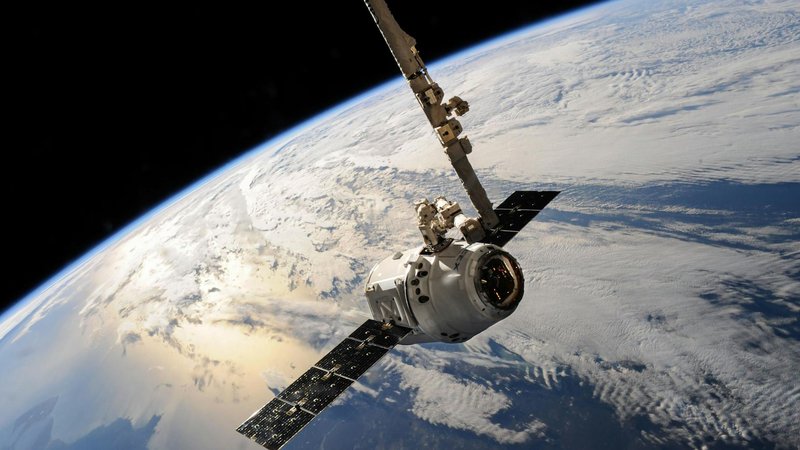
The Wall Street Journal reported Tuesday that Google and SpaceX are in talks to launch orbital data centers, with Google also reportedly speaking to other rocket-launch companies. The talks come ahead of SpaceX's reported $1.75 trillion IPO later this year, with the orbital-AI-compute thesis as the core valuation pitch. Google's existing Project Suncatcher (announced late 2025) plans prototype satellites by 2027. For anyone tracking the AI-infra-goes-orbital thread — Anthropic+SpaceX+Colossus 1 (May 6), Cowboy Space's $275M raise to build its own rockets (May 12) — this is the third major data point in a week, with the biggest valuation behind it.
Critical context worth carrying explicitly: SpaceX acquired xAI in February 2026, which is why the Anthropic deal last week involved xAI's Memphis data center compute. The consolidation means SpaceX now controls Colossus 1 in orbit, Colossus 2 on the ground in Memphis, the orbital launch capacity, and the future orbital satellite fleet — a vertically integrated AI-infra stack assembled in months. Google's $900 million investment in SpaceX from 2015 gives Google equity exposure to the IPO; an orbital data center deal would give Google compute access through that vehicle. Project Suncatcher's 2027 prototype timeline is aggressive (Cowboy Space's first launch isn't until end of 2028), but Google has the advantage of being able to buy launch capacity from SpaceX rather than build rockets in-house. The honest counterpoint from TechCrunch's own reporting: today's terrestrial data centers are still much cheaper than orbital ones once satellite construction and launch costs are factored in. The orbital pitch is a bet on future cost curves — Starship driving launch cost down, satellite manufacturing at scale, radiative cooling sidestepping the water and grid constraints throttling terrestrial buildout — not on current economics. The QTS Georgia 30M-gallon water case from last week and Anthropic's compute pressure that pushed it to Colossus 1 are the demand-side signals making the orbital math eventually pencil out, even if not today.
The orbital data center category went from "one Anthropic deal + one rocket startup" to "Google+SpaceX deal in talks + SpaceX IPO valuation thesis + Project Suncatcher accelerating + xAI acquisition completed" in roughly a week. Microsoft's position is the obvious gap — not named in current orbital deal coverage. AWS has its own constellation (Kuiper) but hasn't publicly committed to orbital compute. The pattern emerging: SpaceX is becoming the prime contractor for AI-infra-in-orbit, with frontier labs (Anthropic locked in via Colossus 1, Google via these new talks, xAI via acquisition) on one side and pure-play orbital startups (Cowboy Space, Starcloud) on the other side competing for the workload that doesn't fit on SpaceX's prime-contractor roadmap. The $1.75 trillion SpaceX IPO valuation is the financial anchor — if it prices anywhere near that, every orbital-compute bet validates retroactively. If it doesn't, the orbital data center thesis takes a credibility hit alongside, regardless of the engineering.
WSJ reported the talks; Google and SpaceX have not confirmed. Google's Suncatcher prototype satellites in 2027 are the near-term technical timeline to watch — that's the credibility checkpoint before the IPO. For builders running AI infrastructure: the question of whether to architect for orbital compute in 5-10 years gets pulled forward by these consolidations. Latency from orbit is non-trivial (50-100 ms minimum for LEO), so latency-sensitive workloads stay terrestrial. Training workloads, batch inference, and archival are the orbital candidates. For the broader audience: the orbital data center category is becoming real, not just because of one bet but because the consolidation pattern is now visible — SpaceX absorbing xAI, frontier labs lining up, hyperscalers in talks. It's still expensive math today; the bet is that the curves cross in the next decade.