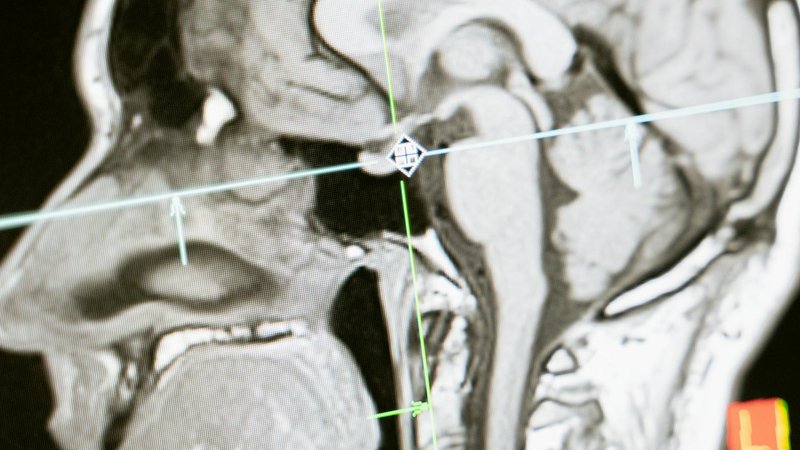
Meta FAIR released NeuralSet on April 29, a Python framework targeted at one of the most painful workflows in neuroscience-AI research: getting brain data — fMRI, MEG/EEG, spikes — into a deep-learning pipeline alongside text or video embeddings from HuggingFace Transformers. Researchers describe the existing toolchain (MNE-Python, EEGLAB, FieldTrip, Brainstorm, Nilearn, fMRIPrep) as battle-tested but pre-deep-learning: it assumes datasets fit in RAM, lacks abstractions for aligning neural time series with high-dimensional model embeddings, and forces ad-hoc pipelines for every experiment. With public datasets like OpenNeuro now hitting the terabyte scale and modern protocols incorporating continuous speech and video stimuli, the infrastructure gap is becoming a scientific bottleneck. NeuralSet is open-source and ships with a paper.
The core design principle is structure-data decoupling. NeuralSet represents the logical structure of an experiment as lightweight, event-driven metadata, completely separate from the memory- and compute-intensive extraction of actual signals. The framework is organized around five core abstractions — Events, Extractors, Segments, Batch Data, and a Backend layer. An Event is a lightweight Python dict with a type, start, duration, and timeline (a unique identifier for a continuous recording session). A Study object assembles all events in a dataset into a single pandas DataFrame, so researchers can filter, explore, and recombine massive datasets using standard pandas operations without loading raw signals into memory. NeuralSet supports BIDS-compliant datasets but is not restricted to BIDS. EventsTransform operations are composable: they can annotate words with sentence context, assign cross-validation splits, or chunk long audio/video stimuli into segments — all on the metadata layer before any signal extraction.
Three things matter here. First, this is exactly the kind of research-engineering work that gets less attention than model releases but compounds harder: a unified data layer for neuroscience-AI experiments removes a category of friction that has been blocking systematic progress. Expect more cross-modal papers from labs that adopt NeuralSet because the time cost of running a new experiment drops. Second, the design pattern — lightweight metadata separate from heavy signal extraction, pandas-native filtering, lazy backend — is the same pattern that has worked in dataframe-on-parquet stacks like Ibis or DuckDB and in lazy-loading deep-learning loaders like WebDataset. The fact that neuroscience tooling is finally getting it is a sign of how much catch-up work is happening at the intersection of academic data formats and modern ML infra. Third, Meta open-sourcing this kind of research-infrastructure tool is a useful reminder that FAIR is still doing fundamental work, not just shipping LLMs.
For builders, three things. First, if you work at the intersection of neural data and ML — BCI startups, computational psychiatry tooling, stimulus-response model research — NeuralSet is the framework to evaluate, not the next iteration of the existing tools. The structure-data decoupling design alone is worth the migration effort if you currently load entire datasets into RAM. Second, the five-abstraction layout (Events / Extractors / Segments / Batch Data / Backend) is generalizable. If you build any tool that pairs heavy media data with model-derived features for ML training, the NeuralSet design is worth studying as a reference architecture. Third, the BIDS-compliance-plus-pandas-DataFrame-as-API pattern signals that academic standards and engineering ergonomics are converging — pick that pattern when you start a new experimental data layer, even outside neuroscience.