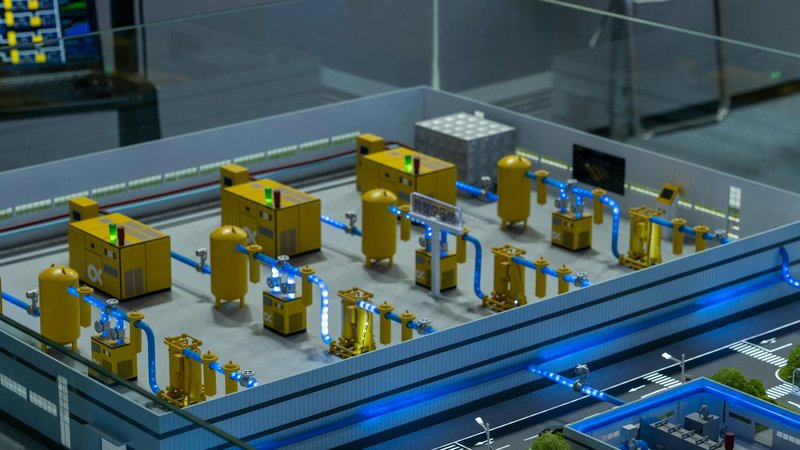
Mistral acquired Emmi AI, a physics-focused AI startup founded in Linz, Austria, with more than 30 researchers and engineers. Emmi's technology covers physics-based modeling and industrial simulation — real-time power grid stabilization, injection molding simulation, automotive safety testing. The full team folds into Mistral's Science and Applied AI divisions; Linz becomes a Mistral office; Mistral plans additional hiring across Austria, Germany, and Lithuania. Stated target sectors: aerospace, automotive, semiconductors, energy. Deal terms not disclosed. The framing — "European Industrial AI Stack" — is the explicit strategic statement, combining physics-based modeling with general AI capabilities to deliver real-time simulations and digital twins for engineering and R&D workflows.
Mistral is making its fourth-lab strategic bet explicit. While OpenAI scales Stargate, Anthropic bets on AI-assisted research velocity (Karpathy hire, Capability Curve framing), and Google builds full-stack vertical integration (Antigravity 2.0, Gemini 3.5 Flash, Blackstone TPU JV), Mistral picks industrial vertical with physics-based modeling as the moat. Physics AI is the combination of learned models with explicit physical constraints — useful for digital twin simulation, where pure neural networks fail because they don't respect conservation laws, and pure numerical solvers are too slow for real-time interactive use. Emmi's specific stack — power grid stabilization, injection molding, automotive safety — is industrial CAE territory: Siemens, Ansys, Dassault Systèmes. Mistral inheriting that capability positions them in direct competition with European industrial-CAE incumbents, not with US frontier labs.
Ecosystem read. The unifying message across this week's strategic moves is that the four major labs are not trying to win the same fight. OpenAI: compute-and-scale Stargate. Anthropic: research velocity per dollar of compute, AI-assisted self-improvement, protocol-and-primitive infrastructure (MCP, Managed Agents, MCP Tunnels). Google: full-stack integration from search to IDE plus TPU JV. Mistral: industrial-vertical AI with physics primitives. European sovereignty plus industrial application plus physics-grounded models gives Mistral a defensible market the US labs are not seriously contesting. For builders evaluating model selection: if your workload is general-purpose reasoning or coding, Claude/Gemini/GPT remain the choice. If your workload is industrial simulation, digital twin, or physics-grounded engineering inference, Mistral just acquired the team that makes them credible in that space. The mid-2026 model market is fragmenting along vertical lines, not consolidating.
Monday: track three things over the next quarter. First, Mistral product announcements from the Linz office — physics-AI-as-a-service API surface, digital twin offerings, industrial-CAE integrations. Second, whether Mistral's general-purpose models continue improving at the same pace, or whether this acquisition signals a quiet de-prioritization of the general-purpose frontier race. Third, customer wins in aerospace, automotive, semiconductors, energy. The European industrial customer base has specific procurement requirements — data residency, sovereign ownership, integration with existing CAE tools — that US frontier labs are structurally disadvantaged on. For European startups building on AI, Mistral becoming a credible industrial-vertical option changes the build-versus-buy calculus on physics-grounded modeling work. The hardest part to predict is whether Mistral has the engineering and customer-development capacity to execute on industrial vertical at scale, or whether this is a smaller-bet hedge. Watch hiring rate in Linz, Munich, Vilnius over Q3 for the signal.