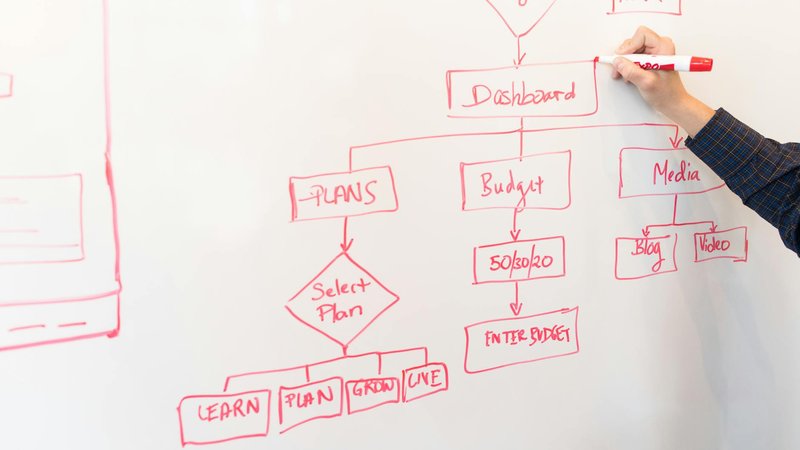
Mistral AI launched Workflows on April 29, an orchestration layer for enterprise AI now in public preview as part of the Studio platform. The pitch addresses a now-familiar gap: AI models and agents are increasingly capable, but reliably deploying them in production remains difficult because the infrastructure for coordination, monitoring, and recovery has been ad-hoc. Workflows are defined in Python, compose models, agents, and external connectors into structured multi-step processes, and can be triggered through Le Chat with execution tracked and audited in Studio. The technical foundation: Workflows is built on Temporal — the open-source workflow-as-code engine that powers durable execution at companies like Coinbase, Datadog, and Snap — extended with AI-specific capabilities including streaming, payload handling, and enhanced observability.
The architecture choice that matters is the control/data plane split. Orchestration runs on Mistral-managed infrastructure; execution workers and data processing stay inside the customer's environment, whether that is cloud, on-premise, or hybrid. That separation is the right answer for enterprises that cannot send their data through a third-party orchestration plane but want a managed scheduler. It is also a deliberate competitive choice: AWS Bedrock, Google Vertex/Agents CLI, and Anthropic's MCP push all have their own orchestration story, but the data-stays-local guarantee is harder to make when the orchestration vendor is also the model vendor. Mistral being European plays into the same EU-data-sovereignty argument the company has been making for two years. On features: stateful execution (resume from failure point), human-in-the-loop checkpoints that pause without consuming compute, retry policies, rate limiting, tracing — table stakes for orchestration, packaged. Engineer Prashanth Velidandi captured the honest reaction: "Finally getting a proper orchestration layer, but in practice, the issues still show up one level below. Getting models to run reliably across different workloads, not waste GPUs, and handle real traffic is still messy."
The agent-orchestration market is converging fast. Earlier this session we covered Slack's coordinator/director/critic/timeline architecture — internal pattern published as engineering reference. We covered Google's Agents CLI — open-source CLI that integrates with Claude Code, Cursor, and Gemini CLI. AWS shipped Bedrock Managed Agents the same week. Anthropic has the MCP push. Now Mistral has Workflows on Temporal. Five distinct approaches, all solving the same problem (multi-step AI processes that fail, retry, need human approval, and need to be auditable), all shipped in roughly the same month. The convergence point: every approach uses some variation of "give the agent deterministic tools, run multi-step processes, persist state across failures, allow human oversight." Differentiation will be regional (EU data sovereignty), tooling (Temporal vs custom), or distribution (Le Chat vs Bedrock vs Agents CLI). The protocol layer underneath — MCP or a close equivalent — is becoming standardized.
For builders, three concrete things. First, if you are already using Temporal for non-AI workflows, Mistral Workflows is the lowest-friction migration path for adding LLM steps — same execution semantics, same SDK patterns. If you are not on Temporal, compare against Inngest, Restate, and DBOS before committing. Second, the control/data plane split is the right architecture for any enterprise AI tool you are building — orchestration is a SaaS surface, execution belongs to the customer. Copy the pattern even if you do not ship on Mistral. Third, the human-in-the-loop checkpoint pattern (pause without consuming compute, resume on input) is the right primitive for any high-stakes AI workflow. Most homegrown orchestration code does this poorly — pausing typically means a polling loop that costs money. Mistral's Temporal-based pause-resume is the reference behavior to implement against.