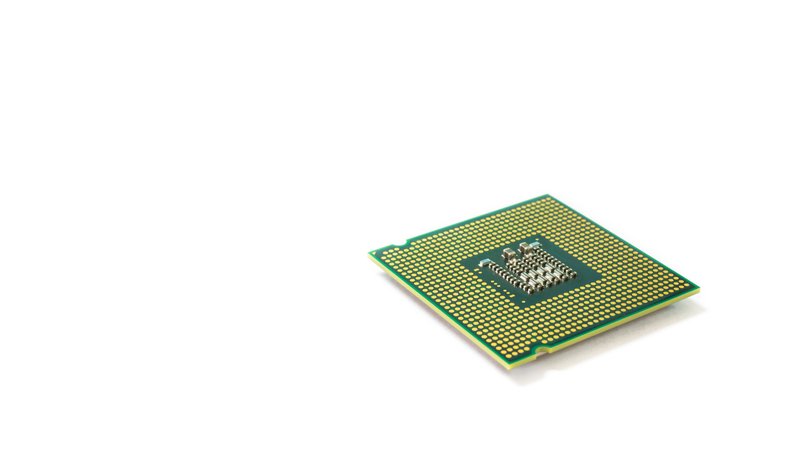
NVIDIA spent the last few years teaching everyone that the GPU is the computer, so it is notable that its newest pitch is a CPU. Vera, announced this week, is what the company calls its first processor built specifically for AI agents, and it is not shy about the framing: not a CPU upgrade, a new category. It serves as the host processor for the Vera Rubin platform and the Vera BlueField-4 STX storage processors, and the quote attached to it from chief executive Jensen Huang is the thesis in one sentence: 'AI agents will be the largest users of computing. Vera is the first CPU designed for that future, built to run agentic AI at hyperscale with extraordinary performance, efficiency and programmability.'
The specifications are aimed at that claim. Vera carries 88 custom Olympus cores, NVIDIA's own CPU architecture rather than off-the-shelf Arm or x86 designs, paired with an LPDDR5X memory subsystem rated up to 1.2TB/s of bandwidth. A second-generation NVLink-C2C interconnect provides up to 1.8TB/s of coherent bandwidth between the CPU and the GPU, which is the number that matters most for the agent story, because it determines how fast the host can feed work to the accelerator without the two halves falling out of step.
The reason a CPU gets a marquee launch is the shape of agentic work. When a model just answers a question, the GPU does almost everything. When an agent takes actions, it runs code, calls tools, evaluates results, and manages large numbers of concurrent environments and queries, and that orchestration is CPU-bound. NVIDIA's argument is that as this becomes the dominant workload, a host processor that cannot keep up leaves expensive accelerators idle, so the CPU is suddenly back on the critical path. Vera is positioned as the part that keeps the accelerators moving.
The honest reading needs two caveats. The performance claim, 1.8x faster task completion, is measured against x86 CPUs using Phoronix benchmarks on code compilation, Python, Java, and database processing, not against NVIDIA's own previous Grace CPU, so it says more about the category than about generational gain. And the systems do not ship until fall 2026, from Dell, HPE, Lenovo, Supermicro, and cloud partners, which makes this a roadmap statement as much as a product. But the direction is the interesting part: the agent era is pulling attention back to the unglamorous host processor, and the company most associated with the GPU is now selling the CPU as the thing built for agents.