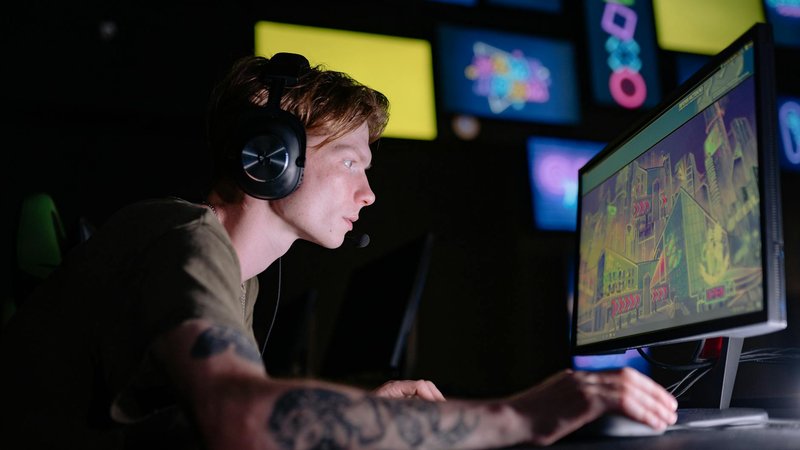
Origin Lab announced an $8M seed round Wednesday, led by Lightspeed Ventures with SV Angel, Eniac, Seven Stars and FPV, plus angel checks from Twitch co-founder Kevin Lin and Cruise founder Kyle Vogt. The product is a marketplace: video game studios sell licensed access to their assets and gameplay footage, world-model labs buy training data, and Origin sits in the middle converting game artifacts into model-ingestible form — rendering runs, automated walkthrough capture, asset extraction. Co-CEO Anne-Margot Rodde named two specific buyers in the TechCrunch piece: Yann LeCun's AMI Labs and Fei-Fei Li's World Labs. The pitch is structural rather than novel: world models need data on how objects move through space, game engines produce that data at scale, and there's been no licensed channel — until now — for the labs to access it without legal exposure.
The Sora-Twitch incident from December 2024 is the prior receipt. OpenAI's first Sora release seemed to regurgitate footage of popular video games and Twitch streamers, suggesting the model had been trained on scraped stream content — a minor scandal at the time but a structural admission that frontier labs were already mining game footage without licensing. Amazon has been publicly open about its interest in Twitch-derived training data. Origin Lab's proposition is to convert that quiet, legally exposed scraping into a clearinghouse with explicit licenses, which is the same arc Getty Images and Shutterstock pushed onto generative-image labs in 2024. Faraz Fatemi at Lightspeed put the underlying capital-markets logic plainly: "We've seen how sharp the revenue scaling can be for data vendors that are serving the major labs. These are very well-capitalized businesses, and the bottleneck for all of them is data."
The ecosystem read here is that world-model data is the layer beneath everything builders care about for embodied AI. Unitree's $15K G1 humanoid (covered earlier this week) needs a vision-language-action policy to do anything useful; that policy needs a world model that understands physical dynamics; that model needs training data with object motion, surface friction, occlusion, lighting variation — exactly what video game engines produce as a byproduct of running gameplay. The Sora incident showed labs were already taking this data; Origin Lab is betting the procurement function moves from "scrape Twitch and hope" to "buy a licensed bundle from Origin." The naming of LeCun and Li is the part that matters most — two of the world-model field's most credible labs are willing to be cited as buyers, which is the strongest possible early validation.
For builders working on physical AI, robotics, or video generation: track which game studios actually sign Origin Lab deals — Epic, Unity, Take-Two, and the major publishers have very different IP positions on player-generated content versus engine output, and the first batch of partnerships will reveal who's actually willing to license. For everyone else, the underlying signal is that the AI training-data layer is bifurcating into specialized vendors: Scale and Surge for human-labeled preference data, Common Crawl and the Books3 successors for text, and now Origin Lab (plus likely competitors) for spatial/dynamics data. The "everything is text" assumption that powered the first transformer wave is no longer the bottleneck; getting motion data at scale and under license is. Origin's $8M seed is small but the procurement pattern it's pointing at is large.