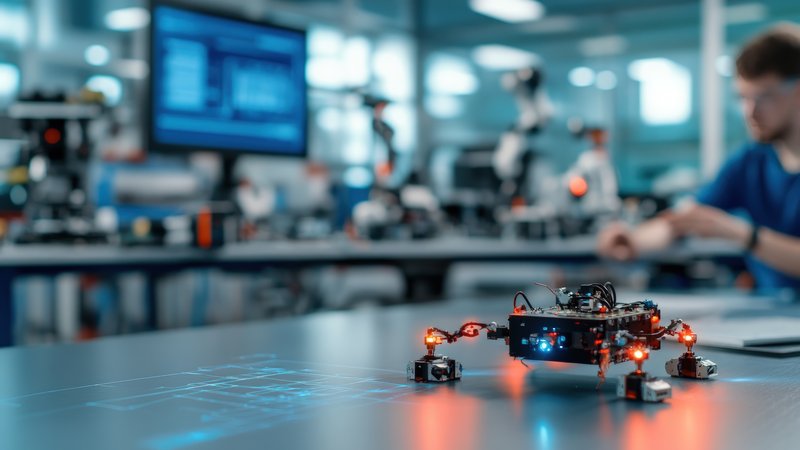
Simulation startup Antioch closed an $8.5 million seed round to build what it calls the "Cursor for physical AI" — development tools that could transform how engineers build and test robots. The company is betting that robotics needs the same kind of intelligent development environment that has made Cursor indispensable for software developers, where AI assists with code completion, debugging, and iteration.
The timing reflects a broader shift in robotics development. While companies like Applied Intuition have built simulation platforms for autonomous vehicles, Antioch is targeting the next wave of general-purpose robots that need to operate in unstructured environments. The robotics industry has struggled with the complexity of testing physical systems — each hardware iteration costs time and money that software developers take for granted. Simulation environments could compress months of physical testing into hours of virtual iteration.
What's notable is how this parallels the recent success of AI-powered development tools. Cursor didn't just add AI features to an existing code editor — it reimagined the entire development workflow around AI assistance. Antioch seems to be applying the same philosophy to robotics simulation, where the traditional approach involves cobbling together multiple specialized tools. The company's framing suggests they understand that winning in developer tools requires obsessing over workflow, not just features.
For robot builders, this could mean the difference between viable and impossible development cycles. If Antioch delivers on making simulation as intuitive as modern coding environments, it could unlock the same kind of rapid experimentation that has accelerated software development. The real test will be whether their tools can handle the messy reality of physical AI systems, where simulated physics often fails to capture real-world complexity.