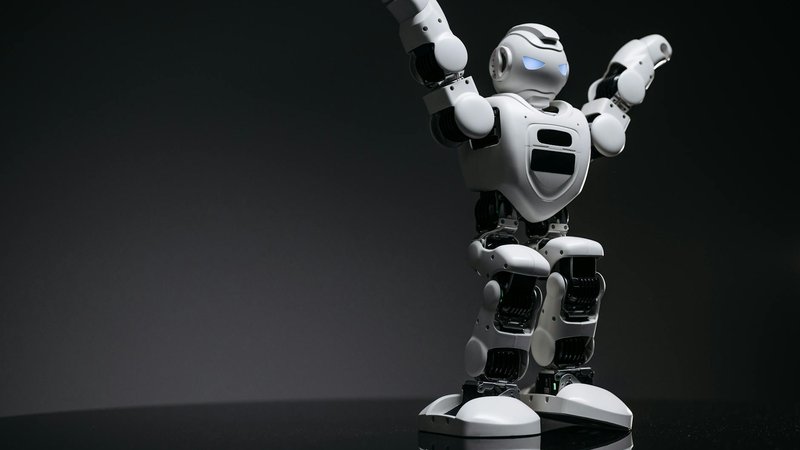
Unitree, the Hangzhou robotics firm, unveiled the GD01 on Monday — a $650,000 walking, transforming, wall-smashing mecha big enough for a human pilot to climb into. The launch video, set to thundering rock guitar with founder Xingxing Wang holding hands with the robot, is a publicity stunt. Wired's Will Knight confirmed the GD01 is a real product. The signal underneath is more useful: Unitree is preparing a 2026 IPO and is using the GD01 to set the upper end of a product line whose actual builder-relevant entry point is the G1 humanoid at roughly $15,000 — about one-tenth what US-made humanoids from Apptronik, Figure, or 1X cost for comparable hardware.
The G1 is what robotics researchers are actually deploying AI workloads on right now. Knight's reporting notes that Unitree's hardware is "easy for researchers to configure and deploy AI programs on" — which translates to an SDK and ROS-compatible interfaces that don't require a six-month integration project before you can run a vision-language-action policy on the platform. Earlier this year Unitree showed numerous G1 humanoids performing synchronized parkour and martial arts at a televised spring festival event, with wireless coordination between units — the kind of demo that signals progress on multi-agent embodied coordination, not just a single dancing robot. The underlying advantage is supply-chain depth: Unitree benefits from China's mature ecosystem for actuators, harmonic drives, and high-density battery packs that US-based firms still pay 5-10× more for at small volumes.
The ecosystem consequence sits across two stacks at once. For the embodied-AI stack — VLA models, world models, sim-to-real — cheap platforms are the constraint that has held back academic and small-lab work. A $15K G1 is in reach of a university lab; a $150K equivalent is not. The Hangzhou IPO this year will price-anchor the category and likely accelerate that. For the geopolitical stack, this is the embodied-AI counterpart to what DeepSeek did at the training-economics level: the assumption that American firms hold the cost frontier no longer survives contact with Chinese supply chains. US humanoid startups have raised on the premise that the form factor is the moat; if Unitree's IPO trades at a Chinese-tier multiple on Chinese cost structure, that premise gets repriced. The GD01 mecha is mostly entertainment; the IPO is the actual capital-markets event.
For builders: if you are doing embodied-AI work, the deployment cost floor has dropped enough to be a planning input rather than a fundraising problem. The G1 ships globally with developer documentation and a Hugging Face presence; the open question is whether the SDK is good enough for fast iteration or whether you spend the cost savings on integration. If you are watching the macro signal, track Unitree's actual IPO filing — that will reveal margin structure, volume, and whether the price gap to US humanoids is durable or a loss-led market entry. The mecha demo is the publicity layer; the supply-chain math underneath is the part that actually moves builder budgets.