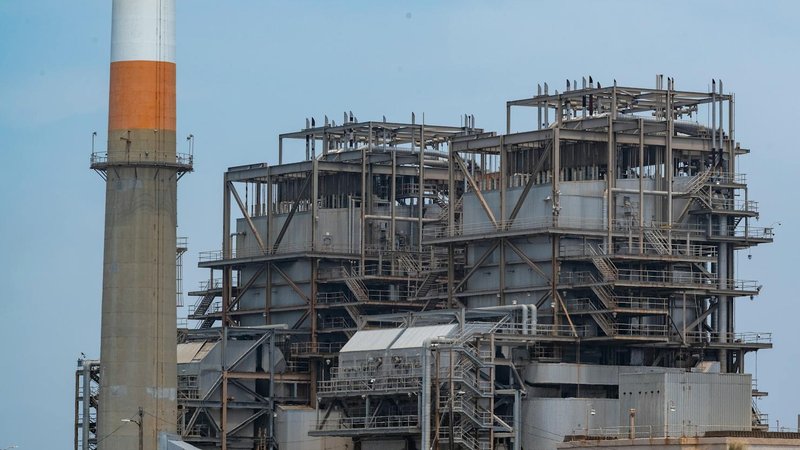
WIRED obtained internal Mississippi Department of Environmental Quality emails via public records request showing xAI added 19 natural gas turbines to its Colossus 2 data center site in Southaven over the past two months. The site now has 46 turbines total, with more than 500 megawatts of new gas-turbine capacity installed since mid-March. Eight of the 19 new turbines — representing over 200 megawatts of output — were installed after the NAACP, Southern Environmental Law Center, and Earthjustice filed an April Clean Air Act lawsuit alleging xAI was operating turbines without the necessary permits. Last week the NAACP filed an emergency injunction asking the court to shut the Colossus 2 turbines down outright.
The legal mechanic is a Clean Air Act loophole: turbines marked "portable/temporary" can operate for up to one year without the stationary-source permits required for fixed power generation. MDEQ granted an air permit covering 41 turbines at the Southaven site in March; SELC's filings say the 27 turbines named in the original lawsuit, plus the new arrivals, aren't covered under that permit. Drone footage and public records show multiple turbines running before the March permit was even issued. The same pattern played out earlier at Colossus 1 in Memphis — sited in Boxtown, a historically Black neighborhood with long-standing air quality problems — where turbines ran without permits, community opposition organized, and the Memphis health department granted a permit anyway in July 2025. xAI's emergency-injunction response argues the data centers are "essential to the operation of cutting-edge artificial intelligence and other computing tools used by the U.S. government and millions of users worldwide, every day," and would "have to precipitously shut down" without the temporary turbines. Named legal counsel: Ben Grillot at SELC. Named NAACP figure: Abre' Conner, Director of Environmental and Climate Justice. MDEQ spokesperson: Jan Schaefer.
The Anthropic-SpaceX-Colossus deal covered earlier this month (#799) reads differently with this context. The same day NAACP filed its emergency injunction against Colossus 2, Anthropic announced it had signed for the full compute capacity of Colossus 1. Musk confirmed on X that SpaceXAI training (the post-acquisition merger of SpaceX and xAI — the Anthropic deal sits inside that consolidation) "already moved" to Colossus 2. The strategic logic now visible: monetize Colossus 1 by leasing it to Anthropic before Colossus 2's legal exposure could ripple back to force broader shutdowns, while keeping SpaceXAI's own training on the legally precarious site. The same-day timing of the Anthropic announcement and the NAACP injunction filing isn't coincidence; it's the corporate moving piece that the broader piece I wrote at the time didn't have the context to surface. The orbital data center thread (#831 Google-SpaceX talks, #818 Cowboy Space, #835 SPAN distributed-terrestrial) gets the same recontextualization: community opposition isn't theoretical or marketing color — it's actively driving architectural decisions about where AI training compute can sit. Environmental justice groups plus the Clean Air Act are the constraint pushing AI infrastructure toward unusual deployment patterns. For builders looking at compute siting, the regulatory cost of AI training compute is no longer just $/kWh; it's $/kWh plus litigation surface per gigawatt.
NAACP injunction is pending. Boxtown community air quality monitoring is the ongoing baseline. xAI's "essential to AI used by US government" framing in court is the geopolitical-priority defense — same shape as chip-export-control national-security carve-outs but now applied to environmental law enforcement. If the injunction is granted, expect SpaceXAI to accelerate orbital deployment plans dramatically; if it's denied, the precedent makes Clean Air Act enforcement harder against all AI compute siting going forward. Either way the next four to twelve weeks will draw the legal line. For the broader audience: this is where "AI's energy demand has environmental costs" stops being an abstraction. Specific Memphis-area Black community, specific lawsuit, specific 46 turbines, and a specific corporate move (the Anthropic deal) timed to dodge the consequences. The pattern across Boxtown, Southaven, Fayette County (#816 QTS water case), and the next AI-compute siting decisions is consistent enough to be the story: community externality first, regulatory response second, corporate workaround third, and the cycle compounds.