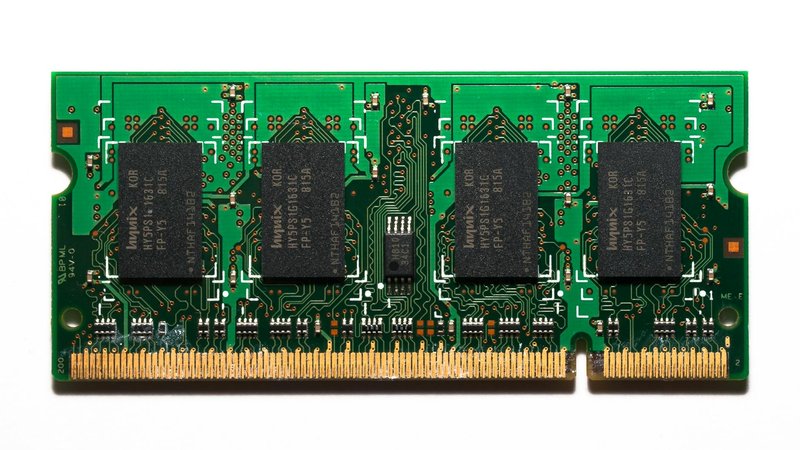
South Korean startup Xcena is building MX1, a near-memory compute chip that connects to DRAM over CXL (Compute Express Link) and places thousands of small RISC-V cores adjacent to the memory rather than shuttling data to a CPU or GPU. The architectural thesis is the part worth reading regardless of the funding headline: AI's binding constraint for a large share of inference work is memory bandwidth, not compute, and the right response is to bring compute to the data. MX1 specifically targets KV-cache management (the store of prior conversation context), preprocessing, and data caching — the memory-bound operations that currently run on CPUs and stall the pipeline. The honest status up front: MX1 is a prototype, no silicon has shipped, the writeup gives zero bandwidth or benchmark numbers, mass production is targeted for end-2026 and revenue for 2027. This is an architecture-direction signal, not a product you can evaluate.
The technical shape, as disclosed: thousands of RISC-V cores deliberately kept small and efficient, a custom internal memory hierarchy, custom interconnect bus, and a custom DRAM controller — vertical integration rather than assembling off-the-shelf parts. The claim is infrastructure consolidation, "what used to require 10 servers could potentially run on just one," which is the kind of number that means nothing without a workload definition and should be read as a target, not a result. The CXL choice is the load-bearing architectural bet: CXL lets the near-memory accelerator sit on the memory bus as a coherent device, so the KV cache can live next to the cores that manage it instead of being copied across PCIe to a GPU. Whether CXL latency and ecosystem maturity make that practical at inference-serving scale is exactly the open question the prototype has not answered.
The ecosystem read connects to the inference-economics thread that has been building all week: KV cache is the memory hog in long-context and agentic serving, and the engines winning that workload (speculative-decoding gains, prefix-cache hit rates) are all fighting the same memory wall from the software side. Xcena's bet is the hardware-side version — disaggregate the inference stack so the memory-bound parts (KV cache, preprocessing) run on cheap near-memory silicon while the GPU is reserved for the compute-bound matmuls. If near-memory KV-cache offload becomes a real category, it changes the cost structure of long-context inference more than another GPU generation does. The risk is threefold: CXL latency could eat the gains, the software ecosystem to target near-memory accelerators barely exists, and NVIDIA could absorb the function into its own memory hierarchy before a startup ships.
If you architect inference infrastructure Monday morning: there is nothing to deploy here for two years, but the memory-bound-vs-compute-bound split is the framing to adopt now — profile which fraction of your inference cost is KV-cache and preprocessing versus actual matmul, because that ratio determines whether near-memory compute would ever help you. If you invest in or build AI hardware: the signal to track is whether anyone ships near-memory KV-cache offload with real benchmarks, because the thesis is sound and the execution is unproven. Watch for shipped silicon and a head-to-head against HBM-on-GPU before treating this as more than a direction.