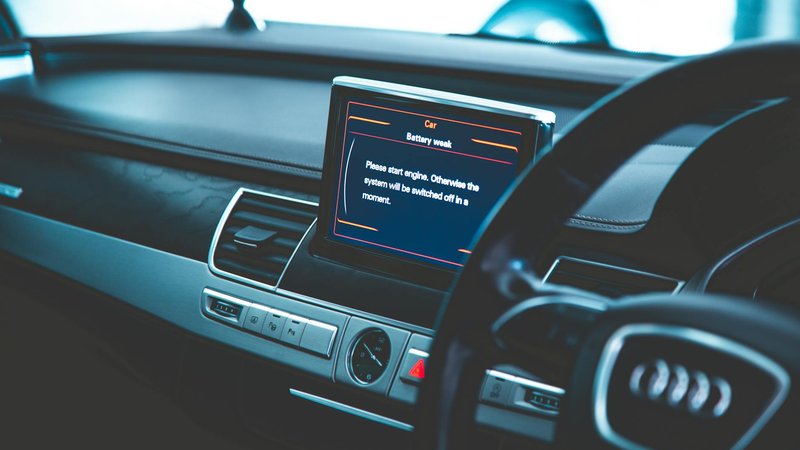
General Motors announced on April 29 that it will roll Google's Gemini AI assistant to approximately 4 million vehicles across the US over the next several months, replacing the current Google Assistant on model-year-2022-and-newer Cadillac, Chevrolet, Buick, and GMC vehicles with Google built-in. The deployment is over-the-air, runs through GM's existing infotainment system, and is — per GM — "one of the largest deployments of Gemini in the industry." US English first; additional languages and markets to follow. The same announcement noted GM has crossed 1 billion hands-free miles across roughly 750,000 Super Cruise-equipped vehicles, the company's hands-off-but-not-fully-autonomous driver-assist system.
Four million units is the part to read carefully. That is a larger consumer-AI deployment than most enterprise rollouts, and it lands inside vehicles where failure modes have physical consequences. Gemini in a car has to handle voice recognition in road noise, intermittent connectivity, ambient distraction, and a UI surface that is illegal to interact with manually past a certain speed. The capability list GM published is conservative — sending messages, navigation, music suggestions, more conversational query handling — and that conservatism is the right framing for an in-car deployment. The question the announcement does not answer: how much Gemini is running on-vehicle versus in the cloud. Connectivity in cars is intermittent by design; either there is significant on-device inference happening, or the assistant degrades gracefully when the cellular link drops, or both.
The deployment matters more for what it implies about the auto-AI distribution market than for the product itself. Tesla does not run Google Assistant or Gemini — Tesla controls its own software stack end-to-end, and the company has been moving toward in-house AI integration. Apple CarPlay vehicles do not have Google built-in. So GM signing on for 4 million Gemini upgrades is partly a market-share win for Google's auto-AI strategy and partly a confirmation that the major OEMs are picking sides on the AI distribution layer. Stellantis, Ford, and Toyota will each end up on a similar fork — Google, Apple, OpenAI/Microsoft, or in-house. Expect more of these announcements over the next 12 months, and expect the choice to be effectively permanent for each manufacturer's vehicle generation.
For builders, three concrete things. First, if you ship any product that integrates with Google Assistant on Android Auto or Google built-in vehicles, your integration is about to be replaced under you with Gemini. Re-test the surfaces you depend on; "more conversational" means user phrasing will drift, which means your intent matching needs to handle a wider phrase distribution. Second, in-car AI is now a serious deployment category — voice recognition in road noise, distracted-driver liability, intermittent connectivity, and OTA update cadence all matter. If you're building tooling for any of these (eval frameworks, latency monitoring, A/B testing for OTA features), this market is bigger than developer-tools press is treating it. Third, the Super Cruise 1-billion-hands-free-miles milestone should change your priors about Tesla's autonomy lead. GM's not-fully-autonomous-but-real driver-assist approach has now logged real-world miles at a comparable scale; "Tesla is years ahead of legacy auto" needs to be qualified by the data.