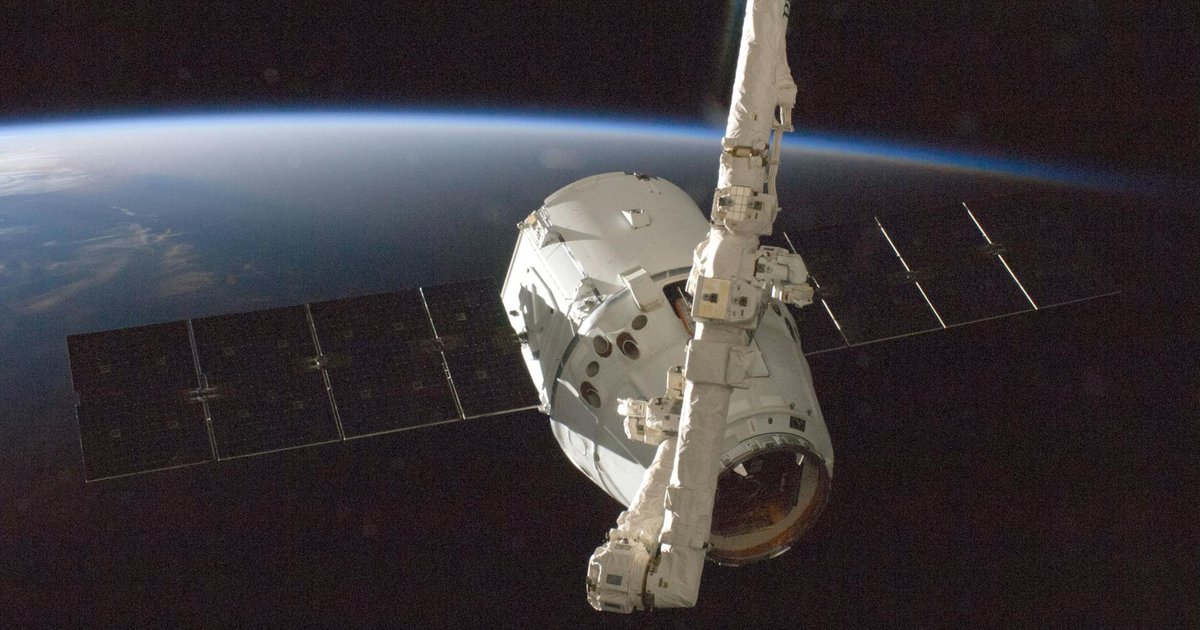
Meta signed a capacity reservation agreement with Overview Energy for up to 1 gigawatt of space-based solar power, with satellites scheduled to launch in 2030 and a first orbital demo planned for January 2028. Overview's pitch is using near-infrared light beams to transmit power from orbital arrays to ground receivers — explicitly not the high-power microwave or laser approaches that have dominated space-solar concept work for decades. CEO Marc Berte says the NIR beam is safe enough to stare directly into, which is the marketing claim, and the underlying physics is plausible: NIR can be transmitted at high efficiency through atmosphere if the receiver and beam steering are accurate, and it does not require the regulatory approvals that microwave power transmission would. Overview has demonstrated aircraft-to-ground power transmission; they have not yet demonstrated orbital-to-ground at any meaningful scale. The deal does not disclose dollar figures and the destination data centers are not specified.
The reason this deal exists is the demand side, not the supply side. Meta's 2024 data center consumption was 18,000+ gigawatt-hours annually, and the AI training and inference workloads they are scaling into 2026-2030 are pushing that number sharply higher. Daytime solar farms work for the daylight hours; the rest of the day requires battery storage at scales that still strain the grid, or natural gas backup that increases their carbon footprint right when they have committed to reducing it. Space-based solar arrays are continuously illuminated regardless of ground weather and time of day, which is the only physical attribute they have that grid solar plus storage does not also have. Meta's bet is that the NIR transmission piece will work at scale by 2030, that Overview can build the orbital fleet in time, and that 1 GW of reliably nighttime power is worth the option premium of being an early customer of an unproven technology. None of those three are sure things.
The technical credibility of the deal hangs on the orbital demo in January 2028. Aircraft-to-ground transmission is a different problem than orbital — atmospheric path length is shorter, beam steering is easier, and the receiver geometry is simpler. The orbital demo will be the first time anyone has measured what fraction of the beam actually arrives at the ground receiver across a full diurnal cycle, what beam-pointing accuracy is achievable from low or medium Earth orbit, and what the receiver footprint and conversion efficiency actually look like at the wavelengths Overview is using. If those numbers come in within an order of magnitude of the marketing brochure, the technology is real. If they do not, this becomes a 2032-or-later technology rather than a 2030 one, and Meta's 1 GW becomes a placeholder rather than a delivery commitment.
For builders working on AI infrastructure or watching the energy story underneath the AI buildout, the practical reading is that hyperscalers have moved past "we will buy the cheapest reliable power we can find" into "we will fund the speculative power technology that might exist by the time we need it." That is the standard tell of a sector with binding capacity constraints. Microsoft has signed nuclear small-modular-reactor deals with the same shape: long-dated capacity reservations on technology that is not yet proven at scale, paid for with the implicit option that if the technology works, the early customer gets preferential access. The Overview deal is more speculative than the SMR deals because space-based solar has never been demonstrated at any operational scale, but the structural pattern is the same. Expect more of these deals from the AI hyperscalers across solar, geothermal, fusion startups, and SMR vendors over the next 18 months. The honest caveat is that any individual deal of this kind has a meaningful probability of producing zero gigawatts. The aggregate strategy makes sense only if you are placing many such bets, which is exactly what Meta, Microsoft, Google, Amazon, and Oracle are now doing simultaneously.