South Korea has unveiled one of the largest coordinated technology investment drives any country has announced, a decade long program that President Lee has branded the Three Mega Projects. The three pillars are semiconductors, AI data centers, and what the plan calls physical AI, which in practice means humanoid robots. It is less a single fund than a national direction, aligning the government and the country's largest companies behind the same wager.
The first thing to be honest about is the headline number, because it is genuinely contested. Different outlets scope the program differently and arrive at very different totals, from Bloomberg's figure of about 1,350 trillion won, roughly 880 billion dollars, to Al Jazeera's framing of more than 1 trillion dollars, to reports citing up to 1.3 trillion dollars across the next ten years. Rather than pick one disputed grand total, it is more useful to follow the concrete commitments underneath, which are specific enough to judge.
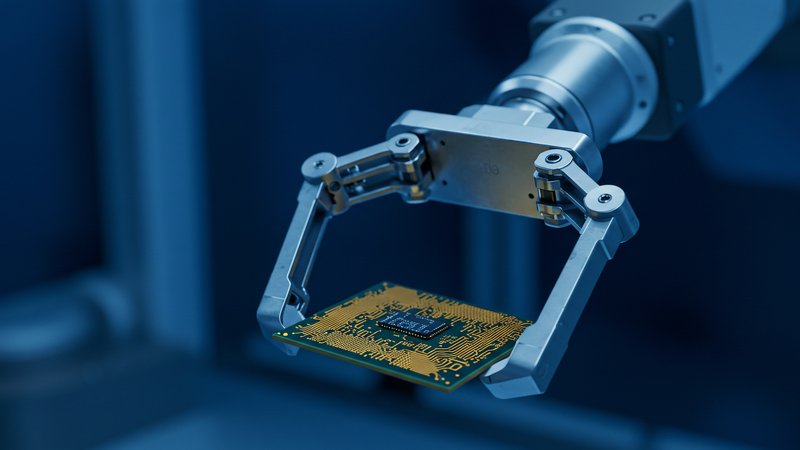
The memory piece is the anchor. Samsung Electronics and SK Hynix, which between them dominate the world's memory market, will invest around 800 trillion won, about 518 billion dollars, together with suppliers, to build new chip fabrication sites in the southwest of the country. The focus is squarely on the memory that AI is starving for: next generation HBM4 high bandwidth memory and processing in memory, the technique of doing computation inside the memory itself. The plan also calls for the world's largest semiconductor cluster in Gyeonggi. This lands in the middle of a global memory shortage that the same companies have warned could run past 2027.
The second pillar is power and compute. A consortium of SK Group, GS Group, and the internet company Naver will invest roughly 550 trillion won to build AI data centers, with a target of 8.4 gigawatts of capacity by 2029 and a further 10 gigawatts by 2035. Those are very large numbers in energy terms, and they reflect the reality that the binding constraint on AI is increasingly electricity and physical infrastructure, not algorithms.
The third pillar is the boldest and the most revealing. Korea wants to grow its share of the global humanoid robot market from about 1 percent last year to 20 percent, and the government plans to be a buyer itself, acquiring humanoids for education, defense, and disaster response. The roadmap describes robots with brains powered by the country's own AI chips, which ties the robot ambition directly back to the memory and silicon pillars. Read together, the three projects share one underlying bet: that the next phase of AI will be defined less by another jump in model cleverness and more by the unglamorous physical layer around it, the memory to feed the models, the power and data centers to run them, and the bodies to put them to work. Whether Korea can hit a twenty fold increase in humanoid market share is an open question, but the direction of the bet is a clear statement about where a major industrial economy thinks the value is moving.