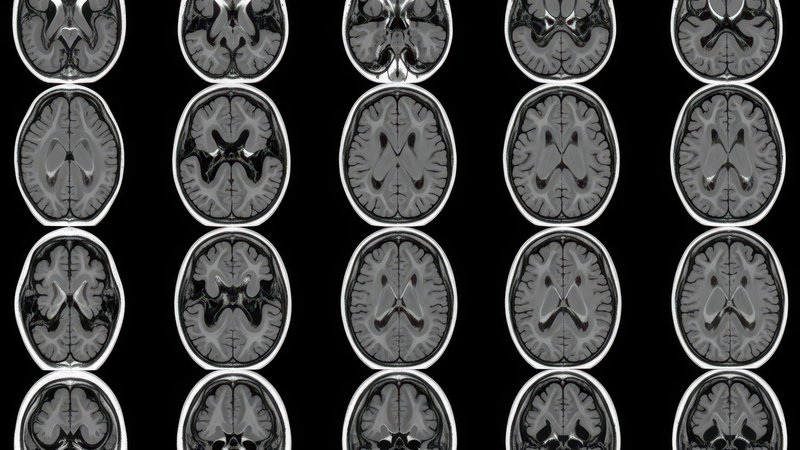
Meta's fundamental research lab, FAIR, has published Brain2Qwerty v2, a system that reads full typed sentences off of brain activity without any surgery. Instead of the implanted electrodes used by invasive brain computer interfaces, it relies on magnetoencephalography, or MEG, a scanner that measures the tiny magnetic fields produced by neural activity from outside the skull. A participant sits in the helmet shaped machine and types, and an end to end AI model reconstructs the sentence they were typing from the raw brain signals alone.
The headline result is a real advance for the non invasive side of this field. Across nine participants, the system reached an average word error rate of about 39 percent, with the best participant down at 22 percent, and roughly 47 percent of sentences decoded to within one word of the target. Meta frames the same numbers as around 61 percent word accuracy, compared with something closer to 8 percent for earlier non invasive approaches. However you state it, going from 8 percent to the low sixties is the difference between a technique that barely functions and one that works often enough to study seriously.
The caveats are large and Meta does not hide them. A 39 percent average word error rate means more than one word in three is still wrong, which is nowhere near reliable enough to compose real text. The hardware is the bigger obstacle: a MEG scanner is a large, costly machine that requires a shielded room and belongs in a neuroscience lab, not a home or an office. And the data needs are steep. The model was trained on roughly 22,000 sentences gathered from only nine volunteers, each of whom spent about ten hours sitting in the scanner while typing, which is a lot of effort to teach a system one person's neural handwriting.
It is worth being clear about what this is for, because the phrase brain to text invites science fiction. Meta states plainly that the research is aimed at helping people who have lost the ability to communicate, for example after a brain lesion or stroke, and that it is not building a product that lets healthy people type emails with their minds. Given the size of the scanner and the error rate, that framing is not modesty, it is accuracy. Anyone imagining a wearable thought keyboard in the near future is reading far past what the work shows.
The reason it still matters is the threshold being crossed, and the question it quietly raises. For years, non invasive brain to text was inaccurate enough to be a curiosity, the kind of demo that impressed in a press release and collapsed under scrutiny. Reaching the point where roughly half of sentences land within a word of the target says the underlying method is no longer hopeless, only impractical, and impractical problems tend to yield to better models and more data in a way that hopeless ones do not. That is also the part worth watching carefully. A machine that can reconstruct language from brain activity, even slowly and imperfectly and only in a lab, is the early end of a capability that will eventually need clear rules about consent and mental privacy. For now the scanner's size is its own safeguard. The interesting and slightly uncomfortable fact is that the accuracy, not long ago the hard part, is starting to give way.